Web UI overview
BHTune's browser application is served by bhtune-server. The Full and Demo modes use the
same navigation and run-history concepts, but the server decides which capabilities are
available before the frontend renders them. Full mode can connect to OPC DA and change
templates, configuration, and PID constants. Demo mode is simulator-only, visitor-private,
and intentionally omits live-plant controls.
The application shell
The header provides the primary navigation, a Catppuccin light/dark theme toggle, and a health indicator. The health indicator confirms that the BHTune HTTP service responds; it does not test an OPC DA gateway or prove that a controller is reachable.
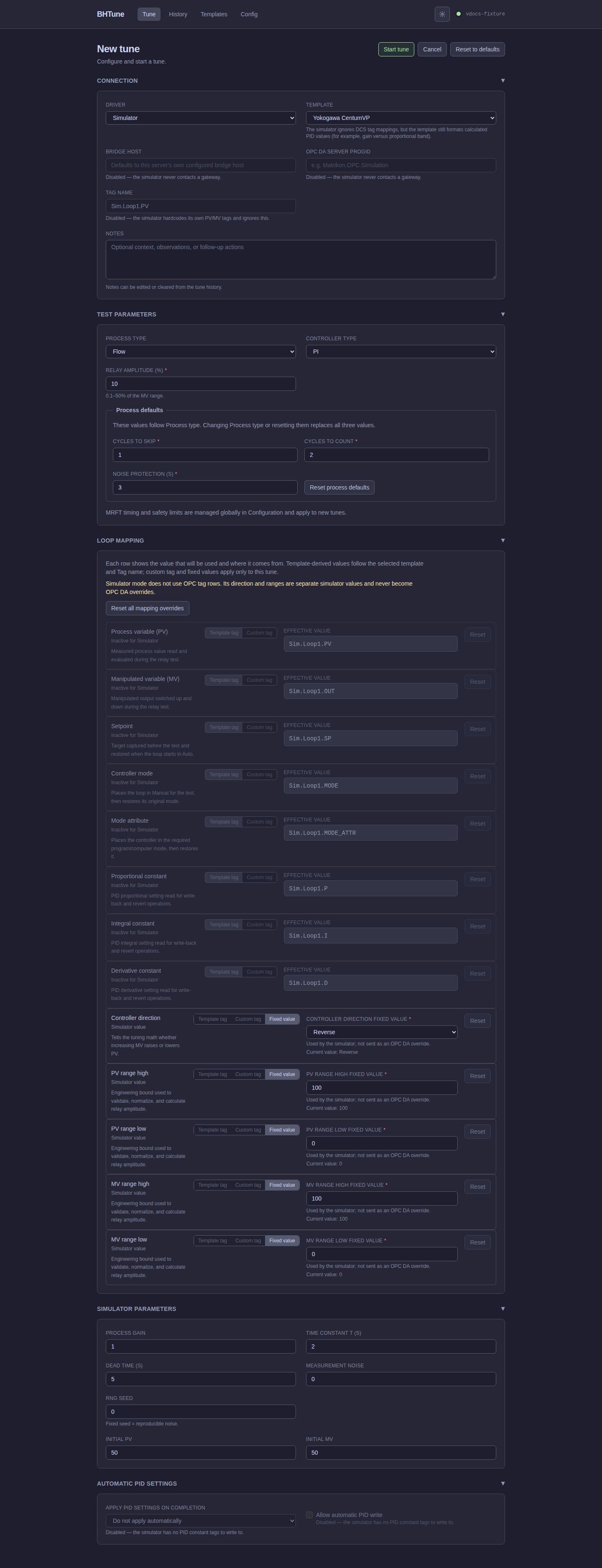
The screenshots in this guide are generated from the production SPA with fixed, sanitized fixtures. They illustrate the current layout and workflow, but the adjacent prose is the operational reference and remains complete when images are disabled. Select any image to open the full-size Pages asset.
Full mode and Demo mode
Full mode exposes the complete local/operator workflow:
- start Simulator or OPC DA runs;
- browse OPC DA servers and tags;
- edit user-owned templates;
- change global quality and retention settings;
- review and write PID values after a run.
Demo mode exposes only bounded simulator tuning and visitor-owned run history. The Demo notice explains the fixed policy and simulator boundary in the browser; it is not an authentication system or a route-level substitute for the server's Demo enforcement.
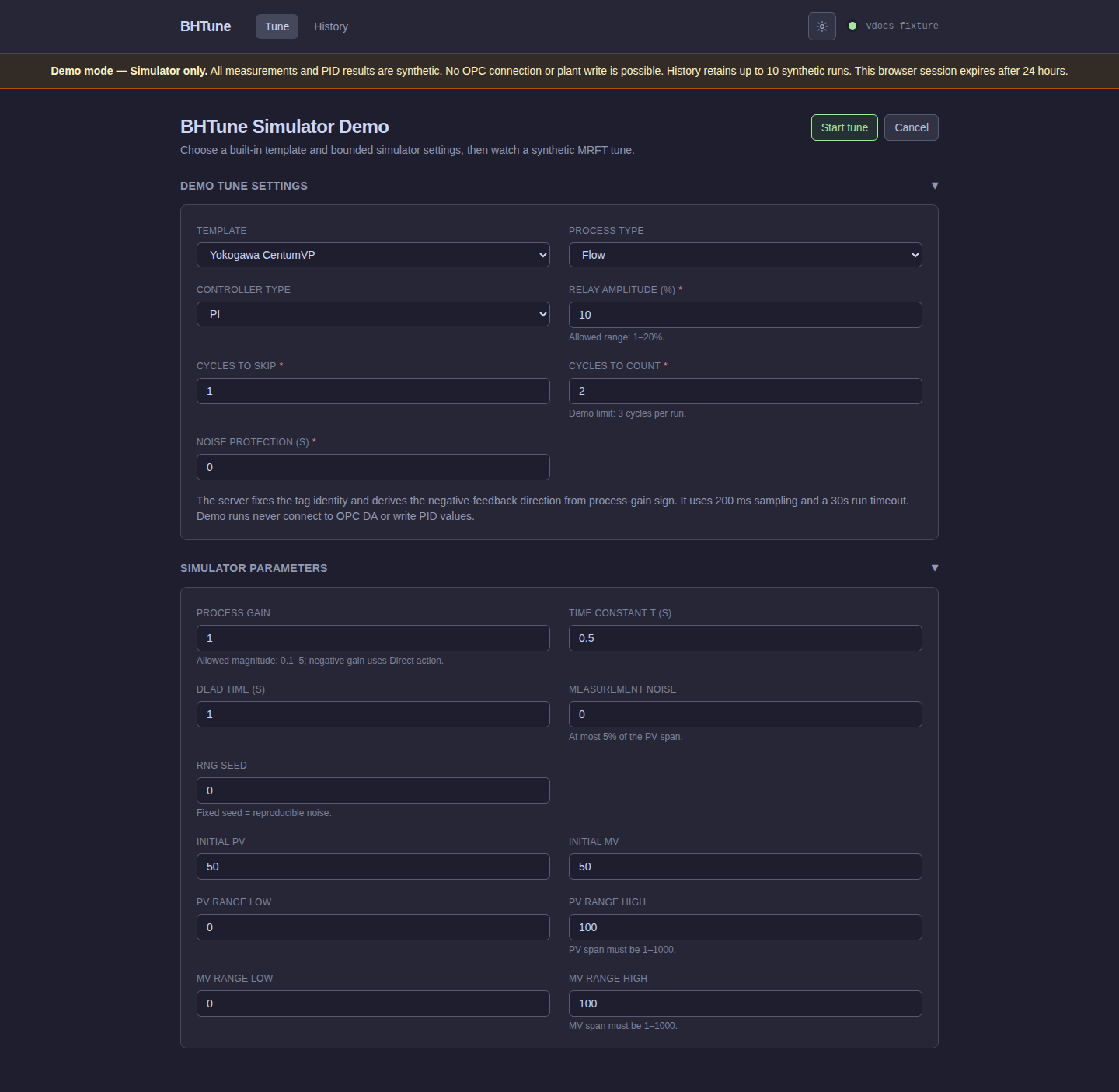
See Public simulator demo for privacy, quotas, deployment requirements, and the security boundary. Use the other pages in this section for task-focused instructions: