Templates and configuration
Templates define the tag suffixes, raw mode values, and PID unit conventions used to turn a single process-variable tag into a complete loop mapping. Configuration controls installation- wide quality and retention behavior plus MRFT timing and safety values.
Templates
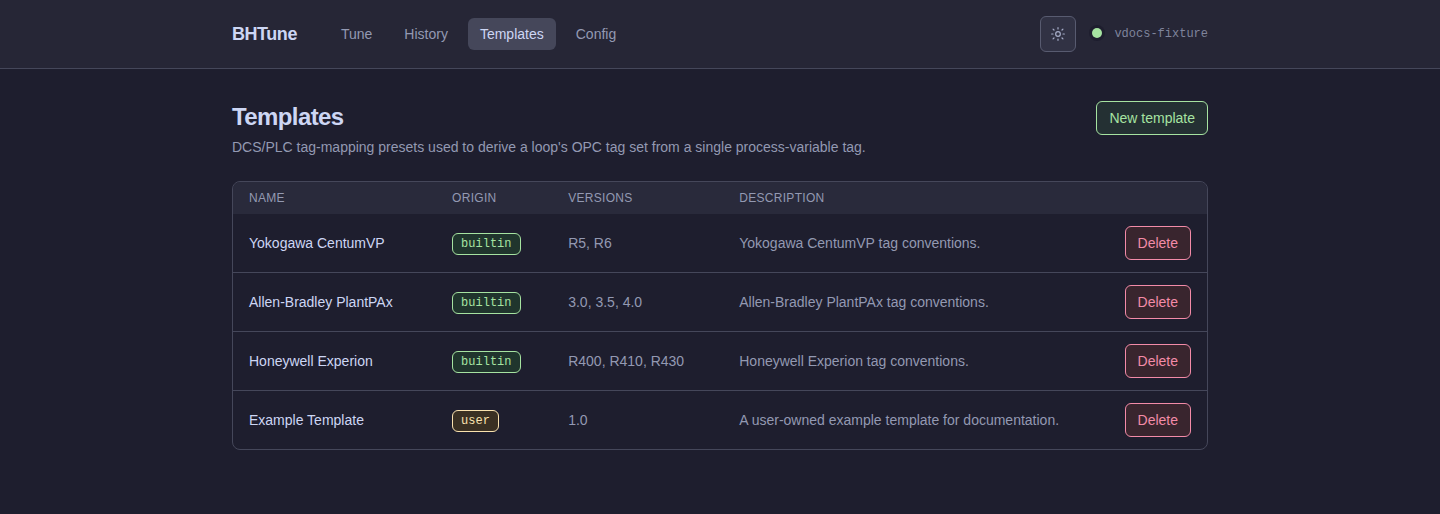
The template list shows built-in, catalog, and user-owned templates. Built-in and catalog rows are re-seeded from their source on server startup; only user-owned templates can be edited in place.
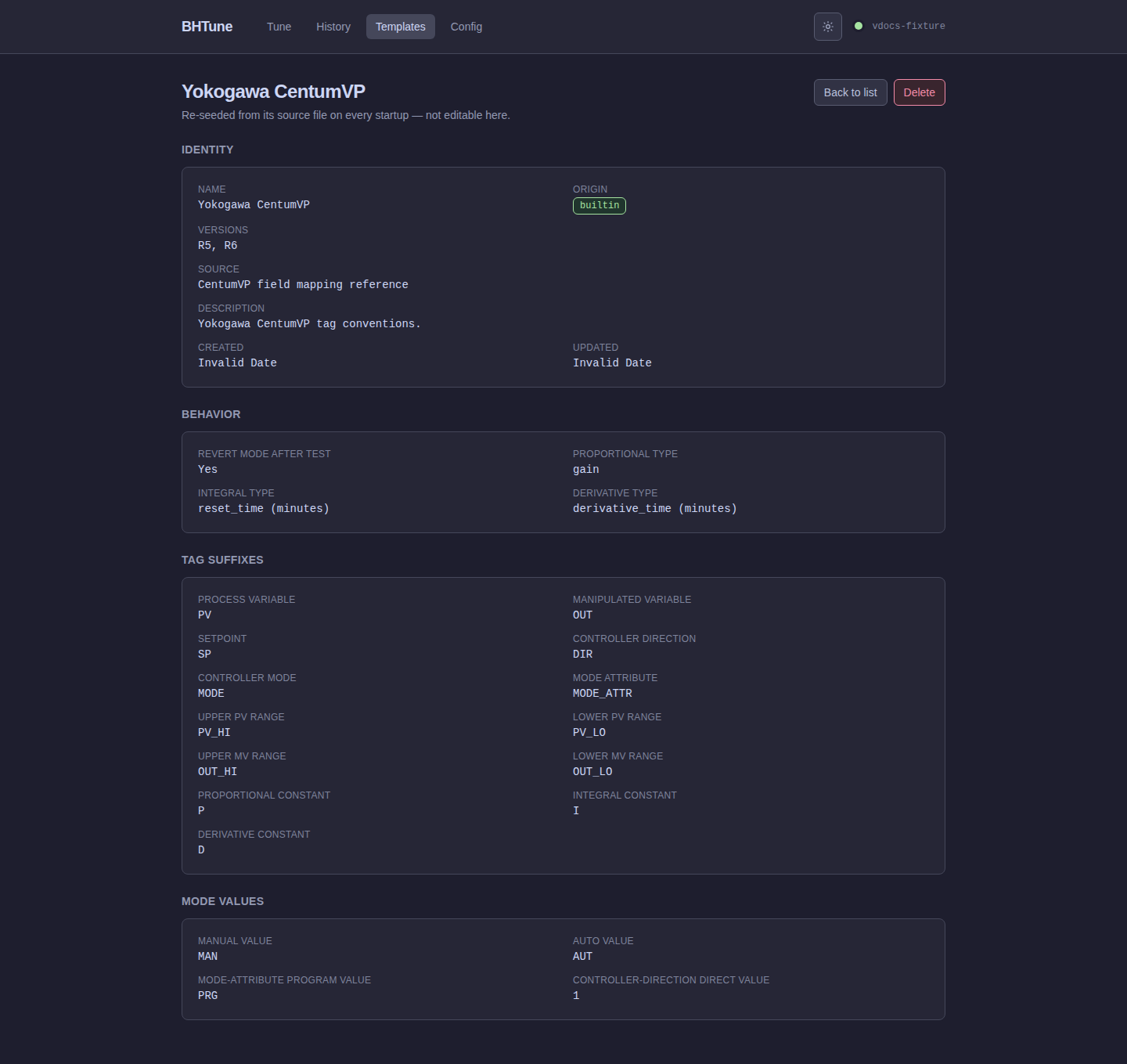
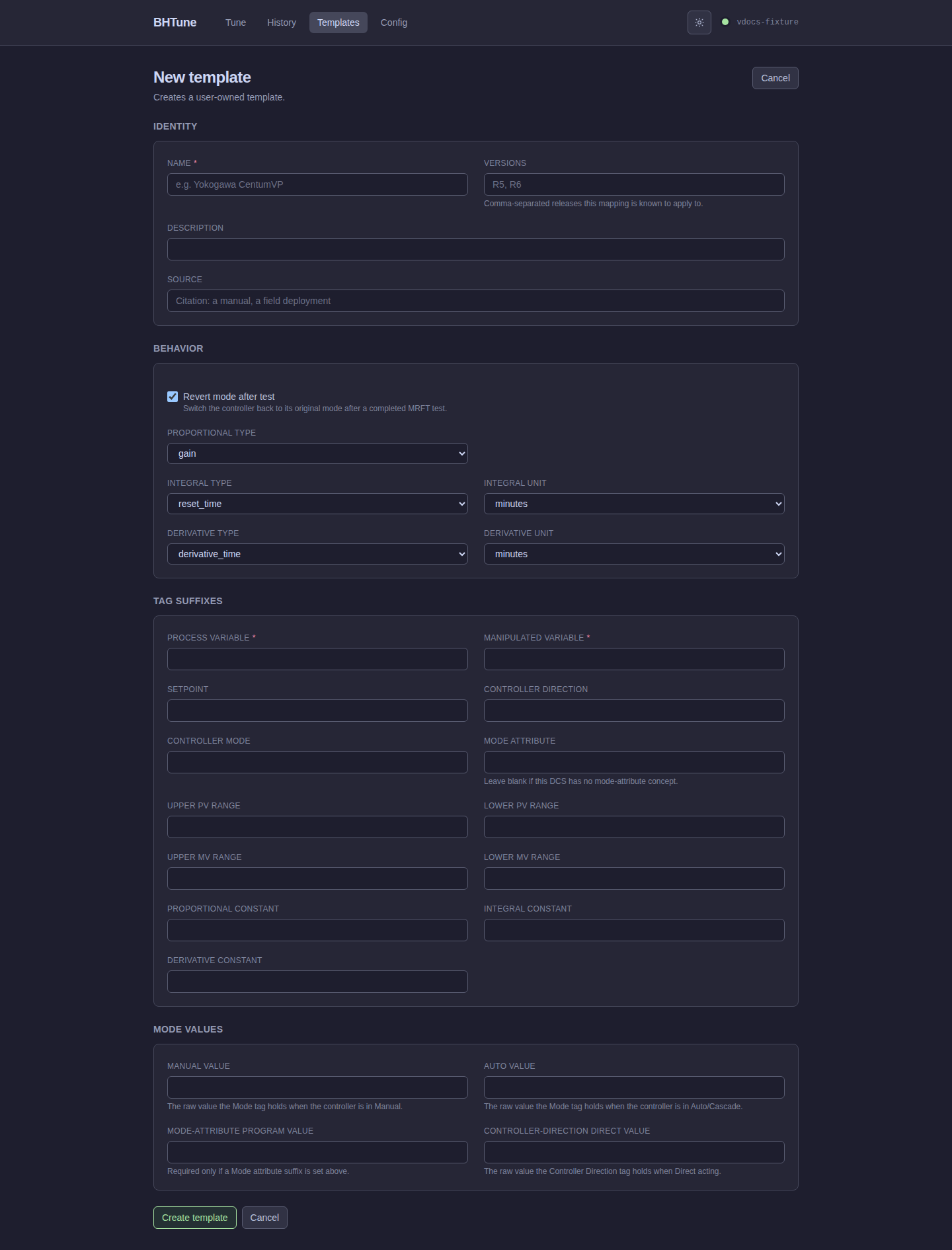
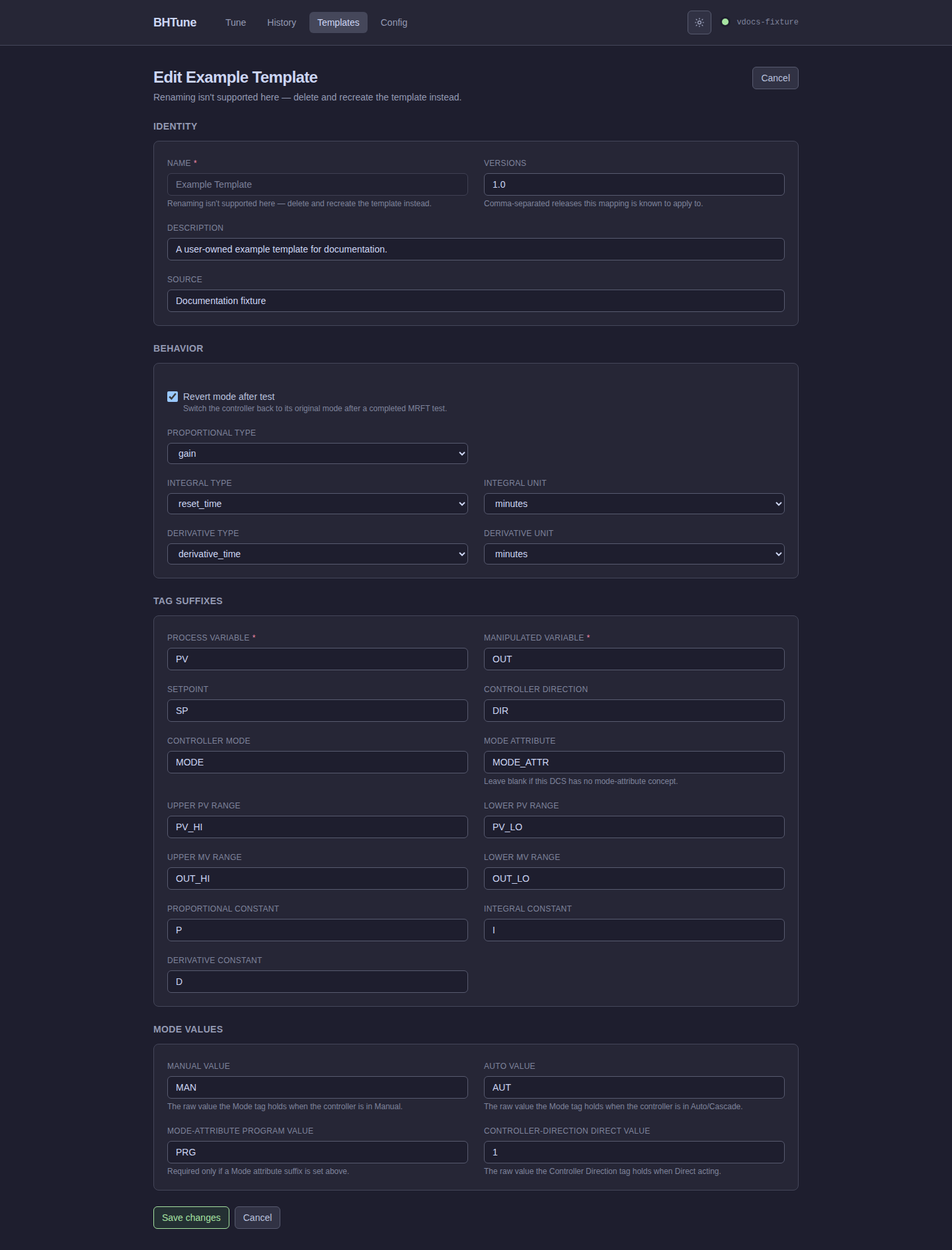
The create and edit forms use the same grouped fields as the read-only detail view. A user's template name is immutable during editing; rename by deleting and recreating it instead.
For the complete field reference, catalog format, validation rules, and the
Area01.FIC101.OUT to Area01.FIC101.PV suffix example, see
DCS/PLC templates.
Configuration
The Configuration page edits the same bhtune.toml used by the CLI and server. It exposes
global Uncertain-quality policy and history retention, along with tuning timing and safety
settings. Startup-only values such as the database path, bind address, log directory, and
template-catalog path remain file/configuration settings.
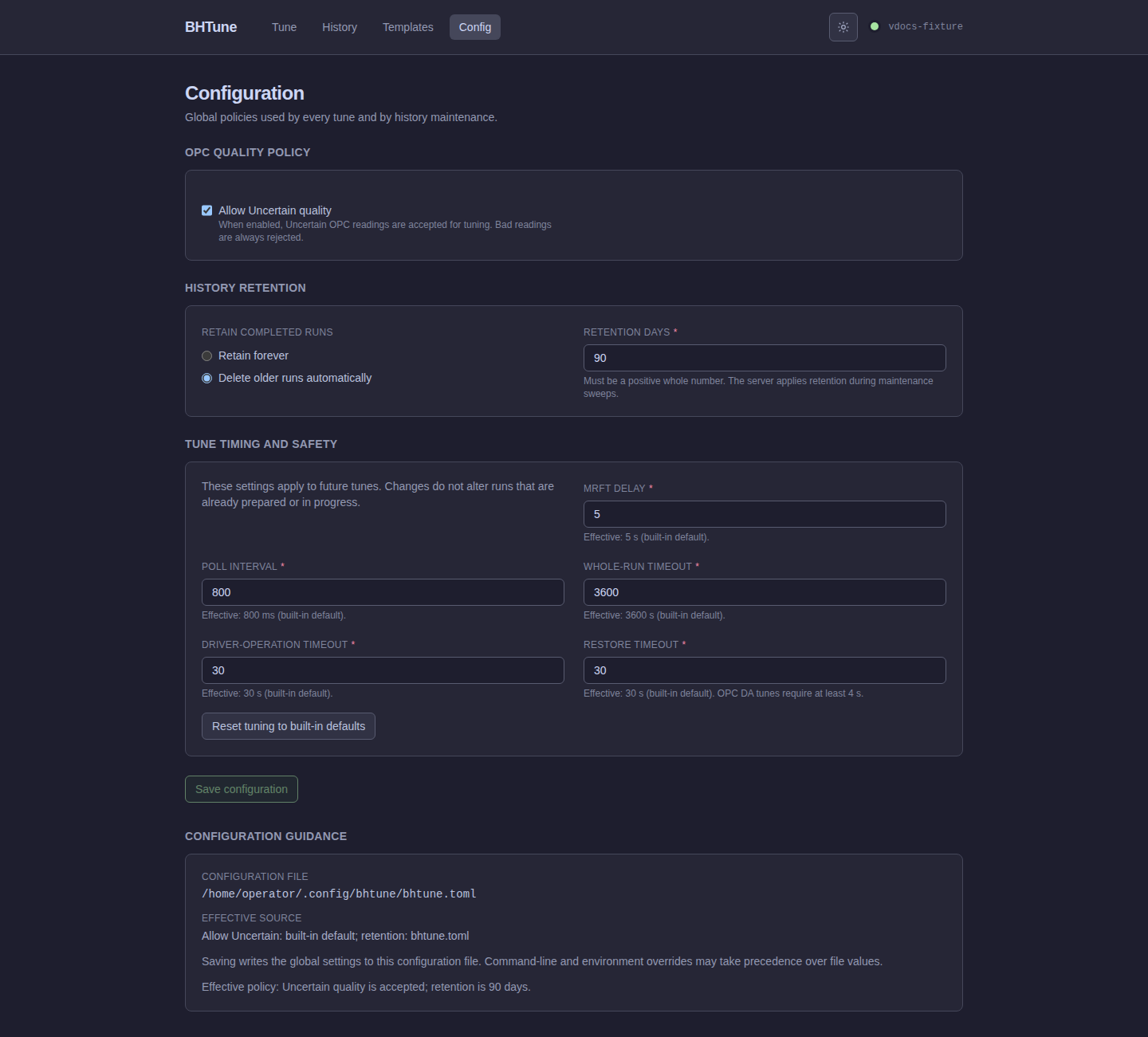
Good readings always pass. Uncertain readings follow the global policy, which defaults to allowed; Bad readings are always rejected. The policy is captured with each run and write/ revert operation, so a later configuration change cannot reinterpret existing history.
Retention is age-based and off by default. Saving a new retention value changes future sweeps;
it does not immediately delete history. The server periodically applies the active policy, and
the CLI exposes the same policy through bhtune history prune.